
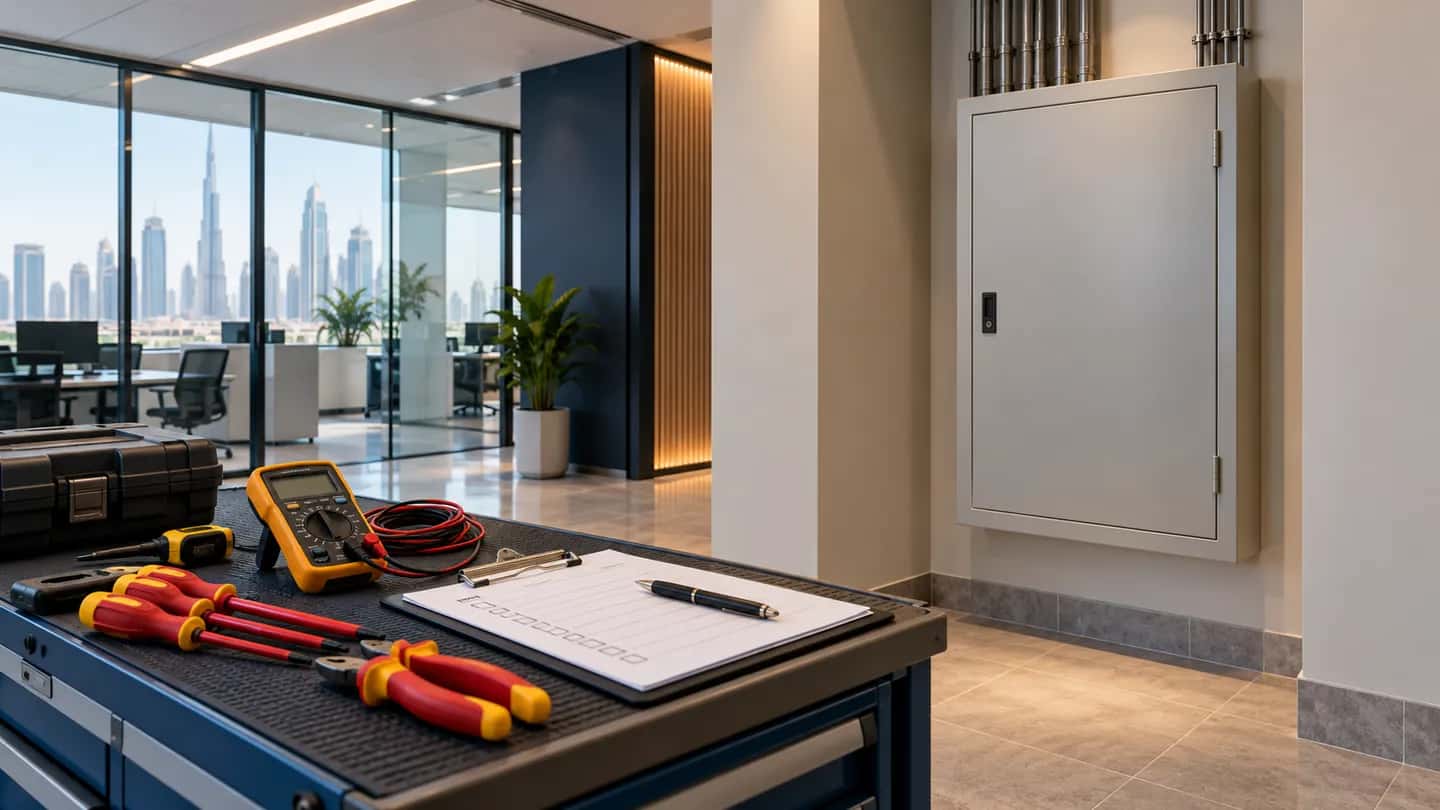
What belongs in an electrical handover?
An electrical handover should combine the accepted installation with the records needed to understand, operate and maintain it. Agree the exact requirements with the project team. Typical categories include final drawings, schedules, inspection and test records, equipment information, demonstrations and a clear status of outstanding items. For UAE projects, confirm the applicable local authority, consultant and building-management requirements alongside the contract.
Define completion before the final inspection
Project teams often use the word complete to describe different things. Installation may be physically finished while testing, documentation or corrective work remains open. Define the milestones in the project plan and track them separately. Agree who accepts each milestone and what evidence is required. This avoids a final handover meeting dominated by arguments about terminology. A clear definition also helps the subcontractor plan its remaining resources instead of guessing what the main contractor expects.
Create a structured snag register
Each snag should have a unique reference, location, description, responsible party and status. Use photographs where they help explain the issue, but include enough written context to find it again. Avoid vague entries such as check all sockets without a defined location or concern. Separate duplicates and related items carefully. A consistent register lets the team understand what remains, assign work efficiently and verify whether corrective action has addressed the original issue.
Prioritise through competent review
Not every snag has the same consequence. The responsible professionals should identify which issues affect safety, required performance or readiness for the next stage. Do not reduce this assessment to a cosmetic checklist. Project managers can support the process by ensuring access, correct information and timely decisions. Keep technical concerns visible until the appropriate party has reviewed them. A polished room should not hide an unresolved electrical issue simply because it is difficult for a nontechnical observer to see.
Verify closure instead of collecting promises
When a contractor reports an item complete, record the appropriate inspection or verification. Where the corrective work affects earlier test results or related systems, the responsible team should determine the necessary further checks. Link the closure record to the original snag reference. This prevents repeated discussions about whether an item was already attended to. It also creates an understandable history for the consultant, main contractor and facilities team when responsibility transfers.
Reconcile final drawings and identification
Check that the final documentation reflects the installed arrangement. Room names, equipment references and circuit descriptions should be consistent across drawings, schedules and labels. Identify who controls the final document issue and remove superseded drafts from the handover set. Photographs can supplement the records but do not replace usable drawings. Clear identification is especially valuable when a future maintenance team did not participate in the construction and has no memory of informal site decisions.
Organise records by system and area
A large folder of unsorted PDFs is difficult to use. Agree a practical folder structure and document index. Group records so the reader can connect equipment, drawings and relevant inspection or test information. Use descriptive filenames and revision details. Check that scanned documents are readable and complete. The goal is retrieval: someone dealing with a specific board or room should be able to locate the relevant information without opening dozens of unrelated files.
Collect supplier and operating information
Identify the equipment documentation required by the contract and obtain the final versions from the responsible suppliers. Include relevant operating and maintenance information and the agreed warranty details without inventing coverage that was not supplied. Clarify contacts and responsibilities for defects after handover. Where demonstrations or training are required, record attendance and the subjects covered. A handover is more useful when the operator understands both the installation and where to obtain further information.
Record outstanding items honestly
Some projects agree a handover with defined outstanding items, subject to the appropriate contractual and technical decisions. If that occurs, record the items, responsible parties and agreed next steps accurately. Do not relabel incomplete checks as complete to make a dashboard look better. Keep temporary arrangements clearly identified and under the responsible team's control. The handover record should allow the receiving party to understand the actual status rather than infer it from a general completion statement.
Test the handover folder with a practical exercise
Choose a specific room or item of equipment and ask a person who was not involved in compiling the records to find its drawing, schedule and relevant verification documents. Watch where the search becomes difficult. The exercise can reveal unclear naming, missing references or duplicate versions before the folder is issued to the operator. Correct the structure and repeat the check on a different area.
Then compare the document index with the snag register. An item should not appear closed in one place and unresolved in another without explanation. Check that final drawings reflect accepted changes and that equipment information corresponds to what was installed. Where a record is missing, assign a responsible party and a clear next action. Avoid filling the gap with a generic document that merely resembles the required evidence.
Use the handover meeting to confirm how later defects or queries will be reported and tracked under the agreed arrangements. Record contact responsibilities accurately without promising response times that have not been agreed. Give the facilities team a concise guide to the folder structure and the status of outstanding items. A well-organised handover reduces dependence on the memory of individual site staff and helps the receiving team manage the installation with greater confidence.
Assign one close-out coordinator
Give one person responsibility for maintaining the consolidated close-out index and identifying missing inputs. This does not transfer technical acceptance from the responsible professionals. It creates an administrative point of control so documents, snags and demonstrations do not drift into separate unconnected lists. Ask each contributing contractor to provide current status and the next action needed. Review discrepancies in a short close-out meeting and circulate the resulting decisions. Before the final issue, check that the folder contains accepted versions and that outstanding items are described consistently. A coordinated record helps the receiving team understand both what is complete and what remains to be resolved.
Define close-out support in your Fixpoint enquiry
When requesting an electrical package from Fixpoint, include the project's handover checklist and expected document formats. Identify the inspection process, final acceptance roles and any required demonstrations. If the enquiry concerns unfinished work, share the existing snag register and available records so the remaining scope can be assessed. Ask for a clear description of installation, correction and documentation responsibilities. An agreed close-out plan helps the project team finish with usable evidence rather than a last-minute collection of disconnected files.
Related reading
Distribution Board Installation Planning https://fixpoint.ae/en/blog/distribution-board-installation-planning
Electrical Testing and Commissioning Readiness https://fixpoint.ae/en/blog/electrical-testing-commissioning-readiness
Reference
Reference guidance https://www.electrical-installation.org/enwiki/Quality_and_safety_of_an_electrical_installation Confirm project-specific requirements with the responsible professionals.
Request an electrical quotation https://fixpoint.ae/en/get-a-quote
Hero image: illustrative editorial illustration; not a photograph of a completed Fixpoint project.
Next step
If you need professional help, request a quote with photos and access notes.