
What makes an electrical BOQ useful?
An electrical bill of quantities is useful when each item connects a measurable quantity to a defined specification and scope. Bidders need to know what is supplied, installed, tested and documented. A good BOQ makes quotations comparable and provides a consistent basis for measuring completed work and assessing changes.
Build the document register first
Before measuring anything, list the drawings, schedules, specifications and revisions forming the tender basis. Record issue dates and identify documents that are preliminary. If a lighting layout and luminaire schedule disagree, raise a query instead of silently choosing one. Send the same clarification to every bidder. Otherwise, different prices may simply reflect different interpretations. Keep the document register with the BOQ so the site team can trace what was priced when later revisions arrive. This also helps distinguish a design change from an original omission.
Describe an item so two estimators understand it alike
A short description such as cable installation leaves too much open. Identify the system, relevant specification, measurement unit and associated activities. Clarify whether accessories, supports, terminations, identification and testing are included elsewhere or within the item. Avoid counting them twice. For equipment, use a reference that links to the approved or tender specification rather than an ambiguous marketing description. You do not need to repeat every technical requirement in every row; you do need an unambiguous route from the row to its requirements.
Choose measurement rules before comparing prices
Cable length, containment length, equipment counts and point-based items behave differently. Explain the measurement basis and how changes will be recorded. If a point rate includes wiring and containment, state its limits and avoid duplicating those costs in separate lines. For provisional quantities, identify how final measurement will happen. A clear rule helps both parties understand the commercial effect of design development. Do not expect a bidder to absorb unlimited routing changes inside an undefined allowance simply because the overall package has a fixed title.
Make the material basis visible
State whether prices are based on specified products, approved equivalents or an allowance awaiting selection. Ask bidders to identify proposed manufacturers and any deviations. Compare lead-time assumptions with the construction programme. A cheaper alternative that has not been accepted is not yet an equivalent offer. Track substitutions separately and obtain the necessary project review before ordering. Where the client supplies equipment, identify delivery dates, receiving responsibility, storage arrangements and how shortages or damage will be reported.
List the costs that do not fit neatly into quantities
Supervision, mobilisation, access equipment, temporary arrangements, documentation and testing can disappear between item descriptions. Allocate them deliberately. Ask whether attendance at coordination meetings and inspections is included. Clarify delivery restrictions and work outside normal site hours where these affect the offer. Treat unknown conditions as identified assumptions instead of hiding them in a vague contingency. The aim is not to force every possible cost into a single format; it is to prevent a material responsibility from being left without an owner.
Use an exceptions register
Ask every bidder to return an exceptions register alongside its quotation. Each exception should identify the affected document, proposed interpretation, price consequence and programme consequence where known. Review this register before ranking offers. A bidder with many qualifications may still be suitable, but you need to understand the complete offer. Issue a final clarification record when the award basis is settled. Without that record, estimating and site teams can work from different versions of the same agreement.
A practical comparison example
Consider two hypothetical quotations for an office package. One includes testing records, circuit labels and access equipment; the other lists only installation labour. The second total is lower, but this does not establish a saving. Add the excluded work to the comparison or obtain revised offers on an identical basis. Keep this exercise transparent and avoid presenting assumed costs as confirmed quotations. The useful result is a like-for-like scope comparison, not an artificial ranking built from guesses.
Plan for revisions and variations
Set up a change log from the first drawing revision. Record what changed, the instruction reference, affected quantities and whether the work has started. Agree how the subcontractor should notify a potential change and who can approve additional work. Keep technical acceptance separate from commercial agreement. An engineer may accept a route without having authority to approve a price. Clear records help the project team resolve these questions while the circumstances are still easy to verify.
Build a commercial clarification sheet
Create a short table with the following headings: item reference, question, bidder response, price effect, programme effect and final agreement. Keep it separate from informal email discussion, then incorporate the settled answers into the award documents. This lets the quantity surveyor see exactly which assumptions were removed and which remain. It also protects the site team from relying on an early version of the offer after negotiations have changed the scope.
For example, ask whether the quoted containment item includes bends, fittings and supports, or whether these appear elsewhere. Ask how final quantities will be established and which records support measurement. Ask whether the testing allowance includes the required reports and attendance at agreed witnessing sessions. These questions do not imply that every item must be bundled together. They make the chosen structure visible. Before issuing a purchase order or subcontract, compare the final commercial schedule with the final technical clarification. If they do not match, resolve the difference while both teams are still involved. A well-written BOQ loses much of its value if the award refers to a different document revision or leaves accepted clarifications outside the agreement.
Check the final tender return
Review the returned BOQ for blank prices, changed units and unexplained quantity adjustments. Ask the bidder to distinguish a zero-priced inclusion from an excluded item. Check arithmetic separately from scope interpretation; a mathematically correct quotation can still omit important work. Retain an editable comparison copy and the original submitted offer. When clarifications change a price, identify the superseded version clearly. This prevents an early quotation from being used accidentally during award. Give procurement and the site commercial team the same final document set so measurement and payment discussions start from an agreed basis rather than conflicting spreadsheets.
Send a quotation package that can be priced
When contacting Fixpoint, send the BOQ in an editable format with the latest drawings and specifications. Identify your tender deadline, planned mobilisation and expected completion sequence. Include an open-query list and ask for deviations to be returned explicitly. If the BOQ is incomplete, say which information is pending and whether an initial budget or a firm quotation is required. This avoids treating a preliminary number as an agreed commitment and makes the next conversation much more productive.
What should an electrical subcontractor return with an RFQ?
For an electrical RFQ in the UAE, request a priced BOQ, a scope and exclusions schedule, a proposed work sequence, and evidence relevant to the bidder's role. RFQ means request for quotation. The return should let the main contractor assess both the commercial offer and the team's ability to deliver the defined package.
Separate prequalification evidence from price comparison. Ask for the current trade licence, relevant insurance information, named supervision arrangements and comparable project references where appropriate. Check any registration or approval claimed by the bidder against the actual project requirement and issuing body. A company profile or photograph does not by itself confirm that the business can undertake every activity described in a tender.
For a labour-only offer, identify who supplies tools, access equipment, consumables, supervision and test records. For supply-and-install electrical works, also request the proposed material basis, procurement responsibilities and delivery assumptions. Give all bidders the same response format so missing information is visible before the commercial review.
Finish the RFQ return with a short list of decisions needed from the main contractor: unresolved drawings, client-supplied materials, access releases and approval responsibilities. Record the quotation validity and any conditions affecting mobilisation. These details help turn a BOQ-led electrical quotation into an assessable offer without treating an indicative price as an unconditional commitment.
Related reading
Choose an Electrical Subcontractor in Dubai https://fixpoint.ae/en/blog/choose-electrical-subcontractor-dubai
Labour-Only vs Supply-and-Install Electrical Contracts https://fixpoint.ae/en/blog/labour-only-vs-supply-install-electrical
Reference
Reference guidance https://dewa.gov.ae/en/builder/useful-tools/dewa-circulars Confirm project-specific requirements with the responsible professionals.
Request an electrical quotation https://fixpoint.ae/en/get-a-quote
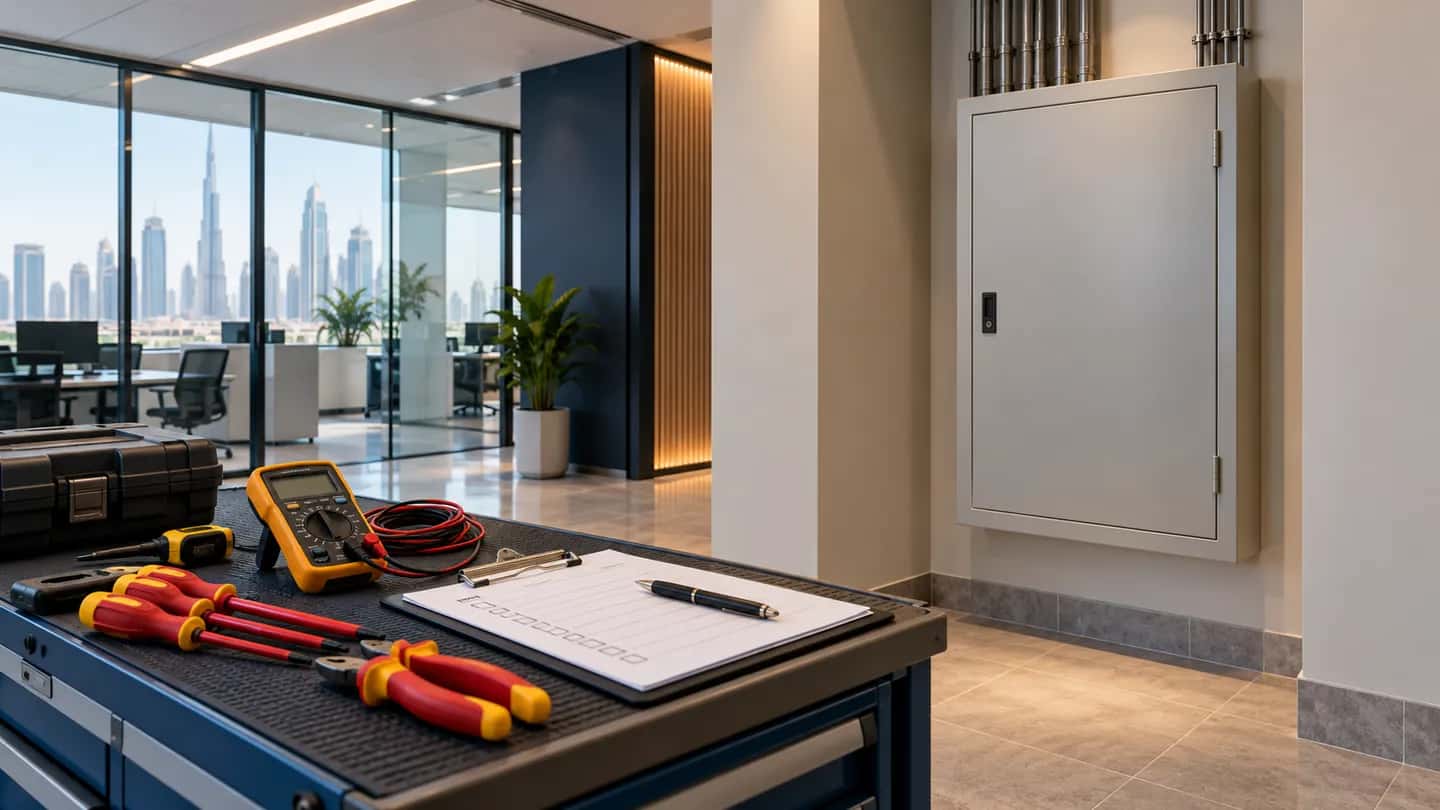
Hero image: illustrative editorial illustration; not a photograph of a completed Fixpoint project.
Next step
If you need professional help, request a quote with photos and access notes.