
What should you check before appointing an electrical subcontractor?
Choose an electrical subcontractor by checking the match between its proposed scope, available supervision, relevant experience, quality process and commercial terms. Compare quotations against the same drawings and bill of quantities. Establish who manages submissions, testing and handover before agreeing on a mobilisation date. A competitive price becomes useful only when the deliverables behind it are clear.
Start with the work package, not the company brochure
A main contractor buying a defined electrical package needs different support from a business looking for a small maintenance visit. Describe the project type, building status, location, work areas and expected programme before asking for a proposal. Identify whether the package includes containment, wiring, distribution boards, lighting, equipment connections or testing. List specialist interfaces separately. A brochure may demonstrate presentation skills, but the tender response should demonstrate understanding of your particular work. Ask the bidder to explain the boundaries in its own words; misunderstandings often become visible immediately.
Check the proposed delivery team
Ask who will supervise the installation each day, who will answer technical queries and who can approve changes. A named point of contact is more useful than a general promise of strong manpower. Review the proposed mix of supervisors, electricians and helpers against the installation sequence. Ask how replacements and additional resources would be organised if work fronts open earlier or later than planned. Availability should be confirmed for your programme, not inferred from photographs of another project. Record reporting lines so site instructions reach the responsible person.
Separate company eligibility from project responsibility
Confirm the company's current licence and the activities relevant to your package. Where authority submissions are involved, identify the enrolled contractor or consultant responsible for them. DEWA's Getting Electricity service identifies enrolled consultants and contractors as applicants. That does not establish any individual supplier's status. Ask for current evidence where relevant and clarify whether the subcontractor performs installation under another party's contractual responsibility. Avoid using vague phrases such as approvals included without listing the submissions and the party accountable for each.
Ask for evidence that matches the building
Experience should be relevant to the constraints you face. An occupied office refurbishment has different access and shutdown issues from an empty warehouse. Ask for suitable project references that the company is authorised to share, together with the scope actually delivered. Discuss how the team managed coordination, material approval and close-out. Do not assume that working somewhere on a large development means delivering the entire electrical installation. A focused discussion about a comparable package can reveal more than a long list of prestigious project names.
Compare the exclusions before the totals
Prepare a comparison sheet with one row for each responsibility. Include materials, tools, access equipment, transport, supervision, testing, documentation and attendance during inspections. Mark items as included, excluded or requiring clarification. If one quotation excludes lifting equipment and another includes it, the headline prices are not directly comparable. Ask both bidders to price the same basis before deciding. Check how variations are measured, who authorises them and when supporting records are required. These details help prevent an apparently economical award from becoming difficult to administer.
Look for a workable quality process
Ask how the subcontractor records installed work before it is concealed. Request examples of blank inspection forms, material tracking records and snag registers rather than confidential documents from other clients. Clarify the sequence for internal checks, consultant inspections and corrective work. A process should identify a responsible person and a retrievable record. A promise to deliver high quality without these practical details is hard to evaluate. Also establish who protects completed work when other trades continue nearby and how damage is reported.
Test the mobilisation plan against the site
A mobilisation date should be supported by actual readiness. Check whether drawings are released, materials are available, access is permitted and work areas are handed over. Discuss delivery routes, storage, temporary facilities and coordination meetings. Ask the subcontractor to identify its first two weeks of work and the information needed to start. This is a useful credibility check: a workable response describes areas and activities rather than merely stating a number of workers. Keep unresolved prerequisites visible in the award meeting minutes.
Electrical subcontractor prequalification checklist
Prequalification should show whether the proposed company and team fit the defined electrical package. Keep a short evidence register before comparing final prices. For each item, record the document received, its date, the person who checked it and any outstanding question.
- Scope fit: request a marked-up responsibility schedule showing the activities accepted, excluded or requiring a specialist interface.
- Company evidence: check the current licence, relevant activities and any project-required registration or insurance with the responsible procurement team. Match documents to the entity named in the quotation.
- Delivery evidence: request an authorised comparable project reference and identify the package actually delivered, the site constraints and the bidder's role.
- People and capacity: identify the proposed supervisor, technical contact and intended resource sequence. Confirm availability for your programme instead of treating a company-wide workforce figure as a project commitment.
- Quality evidence: review a blank inspection record, sample handover index and proposed process for closing defects. Ask who maintains each record on your site.
Use three review states: evidence received, clarification open and accepted for this package. A missing item should remain an open action rather than receiving an invented score. For example, a valid company document may satisfy one check while the named supervisor's availability remains unresolved. Keep both facts visible. Prequalification informs the appointment decision; it does not replace the agreed scope, technical review or project-specific approvals.
Run a clarification meeting before award
Use the meeting to test assumptions with a realistic scenario. Suppose the first floor is ready but the second floor is delayed by partition work. Ask how the subcontractor would resequence its resources and what information it would need from the main contractor. Then consider a late material selection or a revised equipment location. These are hypothetical planning examples, not predictions about your project. The value is in seeing whether the proposed team can explain a practical response. Record the agreed approach and distinguish a firm commitment from an option requiring further review.
Also ask how the first progress report will look. It should identify work completed, work awaiting inspection, blocked areas and decisions needed. A report that only states the number of workers on site does not explain whether the package is moving toward completion. Ask for a simple area-based view that your site manager can use in coordination meetings. Finally, confirm the route for escalating unresolved issues. The person receiving a technical query should know who can decide it and when a response is needed. Good communication is most useful when it produces a documented decision that the installation team can follow.
A final appointment check
Before appointment, ask your site manager to read the final proposal and identify the first activity the subcontractor will perform. Check that the required drawing, material and work area are available. Confirm the supervisor, reporting route and inspection arrangement. If these cannot be explained from the documents, clarify the gap before mobilisation. Keep the final quotation, agreed exclusions and clarification record together. This gives the delivery team a usable starting point and reduces dependence on conversations that took place during tendering. Review the same documents at the first coordination meeting so both organisations begin with a shared understanding of the work.
Prepare a useful enquiry for Fixpoint
For an electrical subcontracting enquiry, share the project location, building use, current stage, proposed scope and target dates with Fixpoint through fixpoint.ae. Include the latest drawings and identify whether the request is labour-only or supply-and-install. Explain any gaps in the design instead of leaving bidders to guess. Ask for a written scope response, exclusions and programme assumptions. A focused enquiry gives both parties a better basis for deciding whether the package and timing are a suitable match.
Related reading
Electrical BOQ and Quotation Checklist for UAE Contractors https://fixpoint.ae/en/blog/electrical-boq-quotation-checklist-uae
Labour-Only vs Supply-and-Install Electrical Contracts https://fixpoint.ae/en/blog/labour-only-vs-supply-install-electrical
Reference
DEWA: Getting Electricity Connections https://dewa.gov.ae/en/about-us/service-guide/builder-services/getting-electricity-connections Confirm project-specific requirements with the responsible professionals.
Request an electrical quotation https://fixpoint.ae/en/get-a-quote
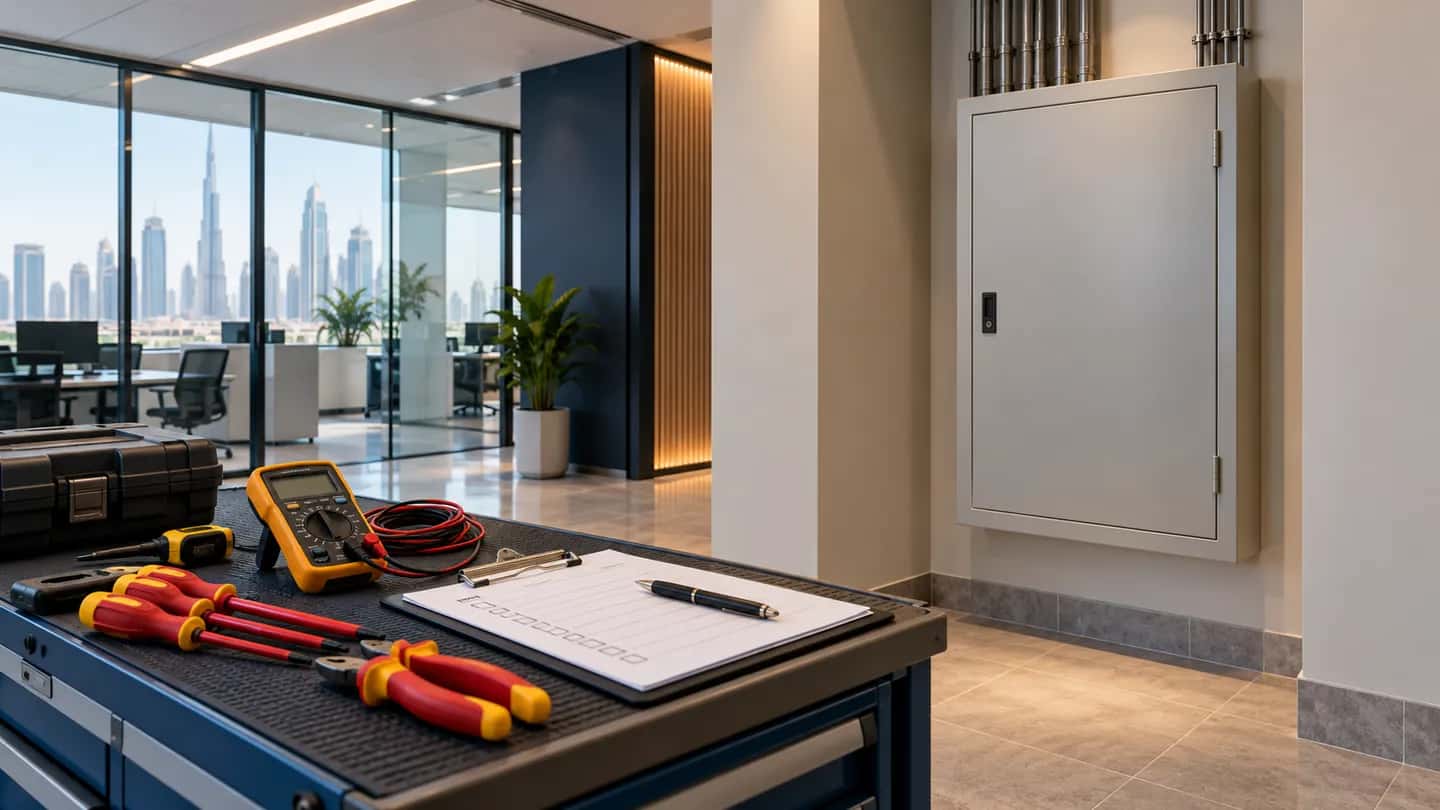
Hero image: illustrative editorial illustration; not a photograph of a completed Fixpoint project.
Next step
If you need professional help, request a quote with photos and access notes.